
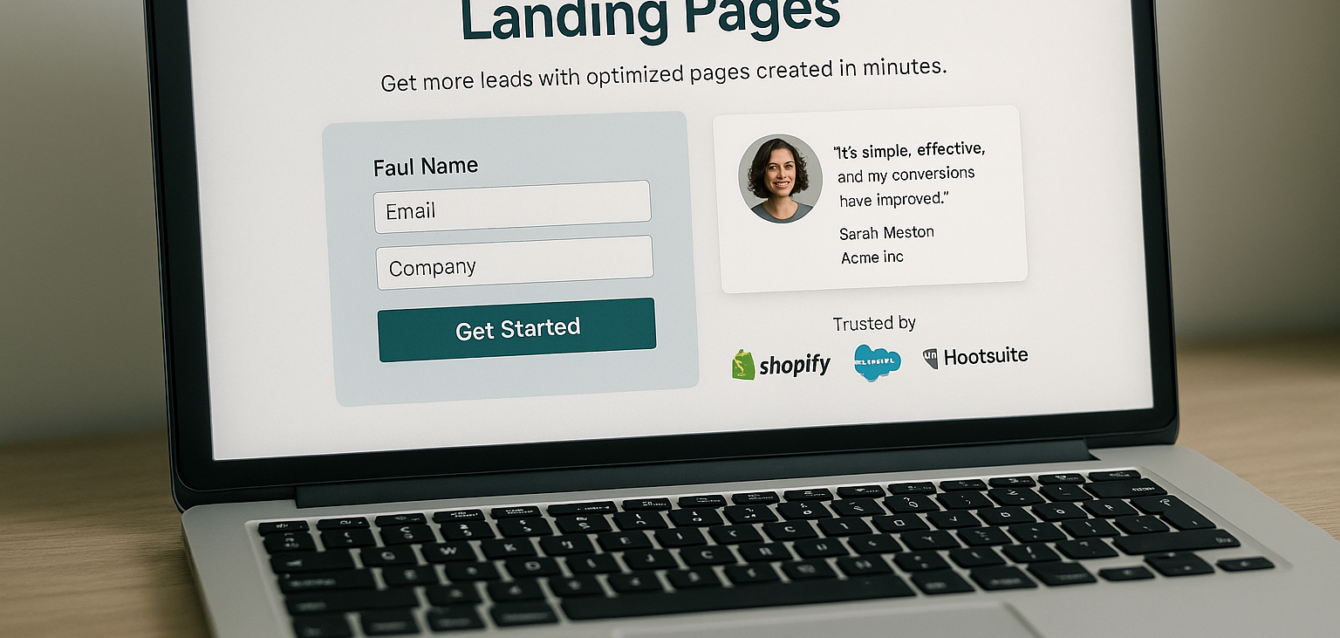
How Unbounce Helps Improve Lead Generation Pages
Lead generation pages need to be focused, clear, and easy to complete. If a page has too many distractions or unclear messaging, visitors may leave without sharing their details. Unbounce helps businesses create landing pages that are built around one clear conversion goal.
A good lead generation page starts with a strong headline. Visitors should immediately understand what they are getting and why it matters. With Unbounce, teams can quickly test different headlines to see which one creates better engagement.
The page layout also matters. Lead generation pages should not feel crowded. They should guide users from the offer to the benefits and then toward the form. Unbounce allows marketers to create clean sections, add visuals, and place CTAs in a way that supports the user journey.
Forms are a major part of lead generation. If the form asks too many questions, users may hesitate. Unbounce makes it easy to create and edit forms based on the campaign requirement. This helps teams reduce friction and improve form completion rates.
Trust signals also improve lead generation. Testimonials, client logos, reviews, or short proof points can make users feel more confident before submitting their details. These elements can be placed near the form or CTA to support conversions.
Another advantage of Unbounce is A/B testing. Businesses can test different versions of a page, including the headline, CTA, form length, or visual direction. This helps improve the page based on real user behavior.
In short, Unbounce helps businesses create lead generation pages faster and optimize them over time. It gives teams more control over campaign pages and helps turn traffic into qualified leads.
#Unbounce #LeadGeneration #LandingPages #DigitalMarketing #ConversionOptimization #ABTesting #MarketingTools #CampaignOptimization