
Building Paid Ad Landing Pages with Unbounce
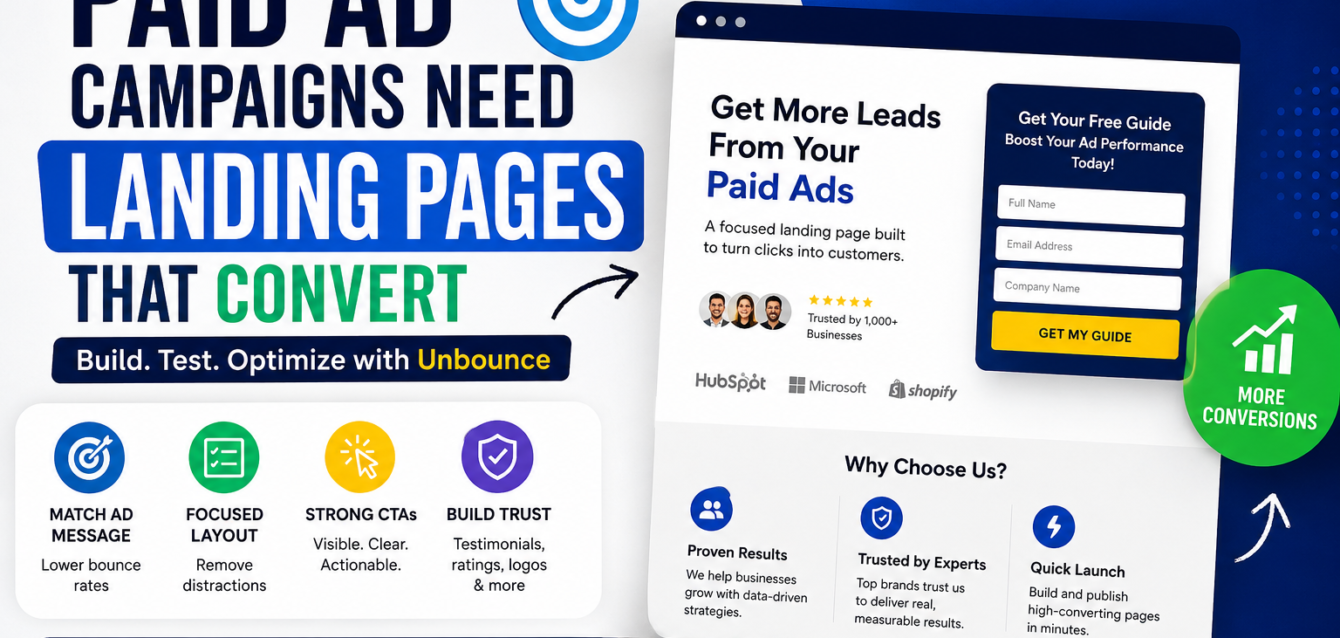
Paid ad campaigns need landing pages that are focused and conversion-friendly. Sending paid traffic to a general website page may not always produce the best results because users can get distracted by multiple links, menus, and unrelated sections. Unbounce helps businesses create dedicated landing pages for paid campaigns.
A paid ad landing page should match the campaign goal. If the objective is lead generation, the page should focus on the offer and form. If the goal is booking calls, the page should guide users toward scheduling. Unbounce allows teams to build these focused pages without waiting for full website development.
The headline should connect directly with the ad. This helps users feel that they have reached the right page. A strong message match can reduce bounce rates and improve conversions.
The layout should be simple. Paid traffic should not be sent to pages with too many distractions. Unbounce makes it easier to remove unnecessary navigation and keep the page focused on one action.
CTA placement is also important. The main button should be visible and repeated naturally throughout the page. If users are interested at any point, they should be able to take action without searching.
Trust signals can improve paid campaign results. Testimonials, ratings, client logos, or short case study results can help users feel more confident before submitting their details.
Another benefit of Unbounce is quick testing. Businesses can create multiple landing page versions and compare performance. This helps improve campaigns over time and reduce wasted ad spend.
In short, Unbounce is useful for building landing pages that support paid advertising. It helps teams launch faster, stay focused, and optimize for better results.
#Unbounce #PaidAds #LandingPages #DigitalMarketing #LeadGeneration #ConversionOptimization #CampaignOptimization #ABTesting