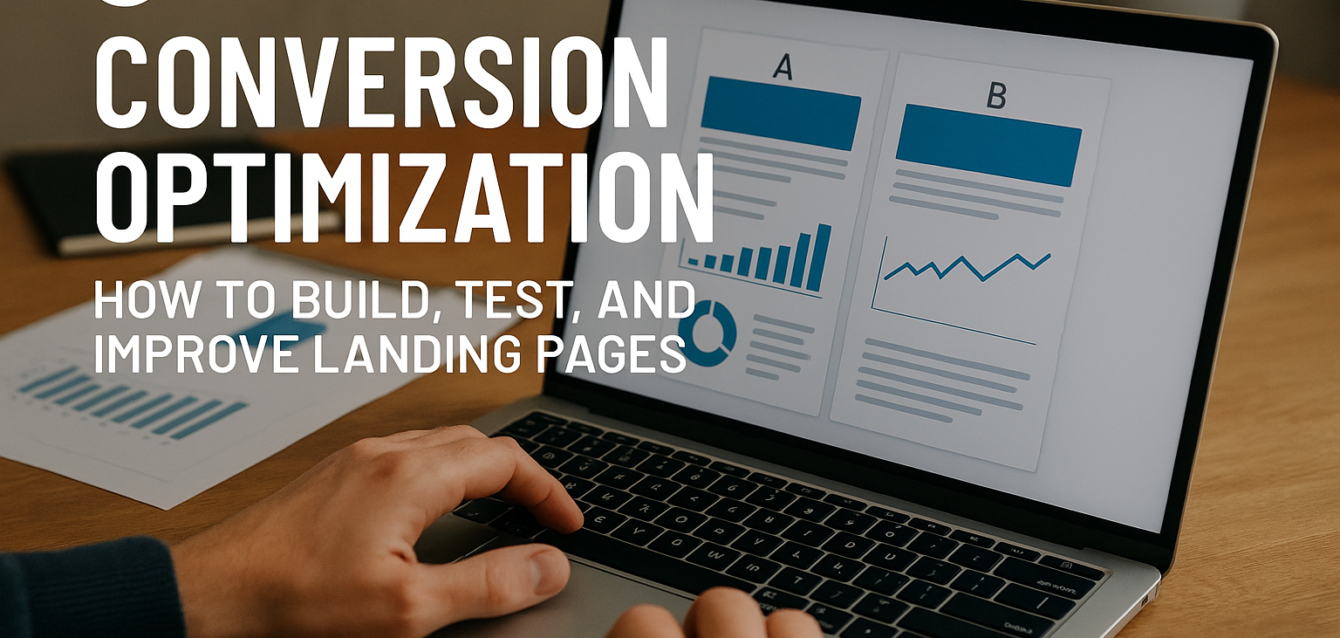
Unbounce conversion optimization gives marketers a faster way to turn landing page ideas into measurable experiments. Instead of relying on assumptions about headlines, layouts, offers, or calls to action, teams can create variants, test them against real traffic, and use conversion data to decide what deserves to stay.
The biggest advantage is not simply building pages faster. It is creating a repeatable landing page optimization process where marketers can identify conversion friction, launch controlled tests, analyze user behavior, and improve performance without waiting for a developer to rebuild each campaign.
Before starting an experiment, use a free CRO audit to identify the biggest conversion opportunities. Testing works better when you already know whether the likely problem is weak message match, low trust, form friction, poor mobile optimization, page speed, or an unclear call to action.
For teams ready to experiment, the Unbounce landing page builder combines landing page creation with A/B testing and AI-powered traffic optimization.
Unbounce reports that marketers using Smart Traffic average 30% more sales and signups, although this is a vendor-reported result rather than an independent conversion rate benchmark.
What Is Unbounce Conversion Optimization?
Unbounce conversion optimization is the process of improving landing page performance through page variants, A/B testing, behavioral insights, conversion tracking, and AI-assisted traffic routing.
A conversion can be a purchase, demo request, lead form submission, account registration, download, or another meaningful business action. The goal is not simply to generate more clicks. It is to increase the percentage of relevant visitors who complete the action that matters to the campaign.
That distinction is critical.
A page can have a high click-through rate and still produce poor lead quality. An ecommerce page can generate plenty of add-to-cart activity while failing to increase completed purchases. A SaaS page might generate form starts but lose prospects because of excessive form friction.
Effective conversion rate optimization therefore looks at the entire conversion funnel rather than one isolated metric.
According to Unbounce’s documentation, A/B testing runs different landing page variants simultaneously so marketers can compare how they perform. The platform allows marketers to control variant weights and measure results against conversion goals.
For teams that need more than software configuration, working with an Unbounce specialist can help connect testing capabilities to a stronger CRO strategy.
How Unbounce Conversion Optimization Works
Unbounce conversion optimization works best as a cycle: identify friction, create a hypothesis, build a variant, test it, evaluate the conversion data, and apply what you learn.
The platform makes experimentation easier, but the quality of the hypothesis still determines whether the test generates useful insight.
1. Identify the Conversion Problem Before Changing the Page
Start with evidence instead of deciding that the page “needs a redesign.”
Review where visitors hesitate, abandon the conversion funnel, or interact with elements that do not support the primary goal.
A heatmap can reveal that visitors rarely reach an important call to action. A session recording might show users repeatedly clicking something that is not clickable. Google Analytics 4 may reveal a sharp drop between landing page visits and form completions.
Microsoft Clarity provides heatmaps and session recordings that marketers can use to study user behavior. Microsoft Clarity can complement Unbounce data by showing how visitors actually navigate a page.
In our analysis of 200+ landing pages, we found that teams often had no shortage of testing ideas. The bigger problem was prioritizing the changes most likely to affect conversions.
Quick win: Identify one observable visitor problem before designing any experiment.
2. Build a Clear Conversion Hypothesis
A strong hypothesis explains what you will change, why you expect it to work, and which metric should improve.
For example:
“If we replace the feature-focused headline with a benefit-driven headline that matches the paid ad, more visitors will understand the offer above the fold and submit the demo form.”
That is much stronger than saying, “Let’s try a new headline.”
Good hypotheses frequently address message match, social proof, CTA clarity, form friction, pricing communication, visual hierarchy, trust signals, or mobile usability.
Our Dreamer Designs 8-Point CRO Audit Framework evaluates headline clarity, above-the-fold layout, CTA visibility, page speed, mobile UX, trust signals, form friction, and behavioral evidence.
You can also use our full CRO dashboard to organize conversion analysis before deciding which experiment deserves traffic.
Quick win: Write the hypothesis in one sentence. If your team cannot explain what the test is trying to prove, narrow it.
3. Create Your Unbounce Landing Page Variants
The next step is turning the hypothesis into controlled variants.
With Unbounce A/B testing, marketers can create different versions of the same landing page and distribute traffic between them.
Unbounce currently supports creating variants by duplicating an existing version or building another variant, after which marketers can edit and publish the alternatives.
Try to isolate the variable being tested.
If you are running headline testing, avoid simultaneously changing the CTA, form, hero image, testimonial placement, and pricing language. If the new variant wins, you will not know which individual change influenced the result.
This is especially important for teams learning split testing. Multivariate testing has a place, but it requires more traffic and more careful interpretation.
Quick win: Start with changes that could materially alter a visitor’s decision instead of testing tiny cosmetic differences.
4. Test the Elements Closest to the Buying Decision
The highest-value landing page tests usually target the information visitors use to decide whether to continue.
Start with:
Headline and value proposition
Offer positioning
Call to action wording
Hero content
Message match
Form length
Testimonials and customer logos
Trust signals
Pricing or risk-reversal messaging
Mobile conversion experience
An ecommerce conversion page, for example, may benefit more from testing product value, reviews, shipping information, or guarantees than from testing a minor background color.
A lead generation page may gain more from reducing five form fields to three than from adjusting button styling.
A professional landing page design service can help when testing reveals that the underlying page structure needs more than a single-variable experiment.
Quick win: Prioritize tests using three factors: likely conversion impact, strength of supporting evidence, and implementation effort.
5. Protect Page Speed and Mobile Performance
Conversion improvements can disappear when a new variant creates a slower or more difficult mobile experience.
Heavy videos, oversized hero images, unnecessary scripts, third-party widgets, and poorly configured fonts can affect page speed. Changes can also influence core web vitals and user behavior before visitors even process your offer.
Google PageSpeed Insights can help marketers evaluate performance and identify technical problems before sending significant traffic to a new variant.
Test both desktop and mobile experiences. Pay particular attention to CTA visibility, text wrapping, form usability, tap targets, navigation distractions, and elements covering important content.
This matters whether your main website is built with WordPress, Shopify, Unbounce, or another platform.
Quick win: Performance-test every major variant instead of assuming a duplicated page will behave exactly like the original.
How Unbounce Smart Traffic Supports Conversion Optimization
Unbounce Smart Traffic uses AI to route visitors toward landing page variants it predicts are more likely to convert for them. This differs from a traditional A/B test, which usually distributes traffic according to predefined percentages.
Unbounce says Smart Traffic evaluates visitor attributes such as location and device while learning which variants work better for different visitors. Its documentation describes the technology as using a contextual multi-armed bandit approach rather than choosing a single universal winner.
The concept addresses a weakness in traditional testing: different visitors may respond to different messages.
A mobile visitor arriving from a social campaign could react differently from a desktop visitor coming through a high-intent search ad. One audience might respond to detailed product information, while another prefers stronger social proof.
With Unbounce Smart Traffic, marketers can create multiple variants and allow the system to optimize routing after its learning phase. Current Unbounce documentation states that Smart Traffic begins optimizing after reaching its required learning threshold and needs at least two variants.
Traditional A/B testing remains valuable when your goal is to answer a controlled question about which variation performs better overall.
Smart Traffic is better understood as optimization rather than a direct replacement for every experiment.
What Should You Test With Unbounce?
The best Unbounce conversion optimization tests focus on factors that change how clearly visitors understand the offer, how strongly they trust it, and how easily they can act.
Headline and Message Match
Your headline should immediately connect the visitor’s intent with the promise on the page.
Someone clicking a Google Ads promotion for “Free SaaS Landing Page Audit” should not arrive on a generic page titled “Transform Your Digital Experience.”
The stronger message match is usually the first version worth testing.
Headline testing can compare pain-focused messaging with outcome-focused messaging, short headlines with more specific headlines, or product-focused language with customer-focused language.
Call to Action
The call to action should explain what happens next.
Generic buttons such as “Submit” provide less context than action-focused alternatives such as “Get My Free Audit” or “Book My Demo.”
Test copy, placement, repetition, and surrounding reassurance. A strong CTA cannot rescue a weak offer, but poor CTA communication can introduce unnecessary hesitation.
Social Proof and Trust Signals
Visitors want evidence that your claims are credible.
Testimonials, recognizable customer logos, review ratings, case studies, security badges, guarantees, client results, and customer counts can reduce uncertainty.
Test social proof close to high-friction points rather than placing every testimonial far below the fold.
Forms
Every unnecessary request for information creates potential form friction.
A sales team may want ten fields, but the visitor may not be willing to provide ten pieces of information before understanding the value of the offer.
Test field count, form layout, required fields, CTA wording, reassurance copy, and whether the form should appear immediately or later in the experience.
Offers
Sometimes the page is not the real problem. The offer is.
Split testing can compare a free trial with a demo, a discount with free shipping, a downloadable guide with a consultation, or different bundles for an ecommerce campaign.
Testing offers can provide more valuable customer insight than constantly changing design elements.
Conversion Optimization Mistakes to Avoid in Unbounce
The biggest Unbounce mistakes happen when marketers confuse activity with experimentation. Creating more variants does not automatically create better conversion insights.
Changing Too Many Variables
If Variant B changes everything, you may discover that it performs better without learning why.
Use focused experiments when the goal is insight.
Stopping Tests Too Early
A temporary lead does not automatically mean that a variant is the true winner.
Traffic composition and small samples can create unstable results. Evaluate enough data before changing your entire marketing program based on an early difference.
Measuring the Wrong Conversion
A button click is not equal to a sale.
Track the action closest to business value whenever possible. Google Analytics 4 uses event-based measurement for user interactions and conversions, which can provide additional context beyond the landing page itself. Google Analytics 4
Ignoring Exit Intent and User Behavior
If visitors leave before interacting with the primary offer, study why.
Exit intent patterns, session recording data, scrolling behavior, and heatmap evidence can help explain whether the issue is trust, relevance, UX, or an unclear offer.
The goal is not to install more CRO tools. It is to collect evidence that improves the next test.
Turn Unbounce Testing Into a Repeatable Growth Process
Unbounce conversion optimization works best when marketers stop treating optimization as a series of random design edits and start treating it as an evidence-based growth process.
Diagnose the problem first. Develop a clear hypothesis. Build a controlled variant. Confirm that page speed and mobile usability remain strong. Run the experiment. Analyze the result against a meaningful business conversion. Then apply what you learned to the next campaign.
Tools such as A/B testing and Smart Traffic can make the process faster, but the strongest results still come from understanding customer motivation, message match, friction, trust, and user behavior.
If you want to build and test campaigns directly, explore the Unbounce conversion optimization platform.
If the page needs deeper UX, messaging, or conversion work, our custom landing page service can help translate CRO findings into a stronger experience.
And before launching your next Unbounce experiment, run a free audit to identify the conversion problems most worth testing first.