Running a successful PPC campaign involves more than just selecting the right keywords and crafting compelling ads. What occurs after someone clicks your advertisement can significantly influence campaign performance. If visitors land on a confusing, slow, or irrelevant page, even the most well-targeted PPC campaign may struggle to deliver results. Therefore, PPC landing page design should be considered a core aspect of your paid advertising strategy.
A strong PPC landing page seamlessly connects the advertisement to the desired action you want visitors to take. Whether your goal is generating leads, booking consultations, starting free trials, or making sales, tools such as Unbounce landing pages empower marketers to create focused campaign experiences instead of directing every visitor to a general website page.
Why PPC Landing Page Design Matters
Every paid click incurs a cost, meaning each visitor landing on your page represents an opportunity. Sending PPC traffic to a homepage can be counterproductive, as visitors may encounter multiple navigation options, services, blog posts, and calls-to-action that distract from your goal.
A dedicated PPC landing page hones in on one campaign and one objective. By using an Unbounce landing page builder, marketers can design individual pages tailored to different advertisements, keywords, audience segments, and offers.
For instance, if someone searches for “free website conversion audit” and clicks your advertisement, the landing page should immediately present information about that audit, rather than listing every service your company provides. This enhances relevance and simplifies the conversion process for visitors.
Match the Landing Page With Your PPC Ad
Message matching is a critical principle in PPC landing page design. Your advertisement makes a promise that the landing page should fulfill. If your PPC ad promotes a 30-day free trial, visitors should immediately see relevant information about that trial upon clicking. If the landing page diverges from the ad’s message, users may mistakenly believe they’ve arrived at the wrong destination.
With Unbounce landing page design, you can create campaign-specific experiences that align headlines, offers, images, and calls-to-action with individual advertisements. Strong message consistency makes the transition from search result to landing page feel seamless, helping visitors understand their next steps.
Create a Clear and Specific Headline
Your headline is one of the first elements visitors notice, so it must quickly convey the value of your offer. Avoid vague headlines like “Grow Your Business Today.” Instead, opt for something more specific, such as “Get a Free Conversion Audit and Discover Why Visitors Aren’t Becoming Customers.” This clearly articulates the offer and benefits.
When designing high-converting landing pages, ensure your headline closely matches the advertisement that drew visitors to the page. A stronger connection between the ad and headline facilitates users’ recognition of the page’s relevance to their search.
Focus on One Conversion Goal
A common mistake in PPC landing page design is overwhelming visitors with too many actions. A page that encourages users to request a quote, subscribe to a newsletter, visit social media, download an eBook, and explore services can obscure the primary conversion goal.
Instead, identify the most crucial action for that campaign and center the page around it. For an Unbounce lead generation campaign, the key action might be completing an inquiry form. For a software as a service (SaaS) campaign, it could involve starting a trial. Streamlining to one primary goal creates a simpler, more focused experience.
Design a Strong Call-to-Action
Your call-to-action (CTA) should clearly communicate what visitors will receive or what happens next. Rather than generic buttons like “Submit,” use descriptive CTAs such as “Get My Free Audit,” “Start My Free Trial,” or “Request a Demo.” These clarify the intended action.
Ensure the CTA stands out visually from surrounding content. When using an Unbounce page builder, position the primary CTA prominently near the top of the page and repeat it where necessary on longer pages. However, repeated CTAs should all point towards the same goal to avoid introducing competing actions.
Reduce Form Friction
Forms are essential for many PPC campaigns, but each additional field increases visitor effort. If you need only a name and email address to deliver an eBook, asking for additional details like a phone number or company size can hinder form completion.
Successful Unbounce conversion optimization requires balancing the information you want from visitors with the information they are willing to provide. Higher-intent offers, such as consultations, may warrant longer forms, while early-stage offers should typically remain simple. Make labels clear, eliminate unnecessary fields, and ensure forms function smoothly on both desktop and mobile devices.
Use Social Proof to Reduce Uncertainty
PPC visitors may encounter your business for the first time, and they might need reassurance before providing their contact information or making a purchase. Social proof, including testimonials, customer logos, star ratings, case study results, and statistics, can help build trust.
Position social proof near areas where users might hesitate, such as inquiry forms or CTA sections. Specific social proof is more powerful than generic praise; rather than simply stating, “They were great to work with,” a testimonial describing how a customer improved leads provides more meaningful validation.
Keep the Landing Page Visually Simple
Effective PPC landing page design doesn’t require elaborate animations or numerous sections. In fact, unnecessary visual elements can distract visitors from the offer. Opt for clear typography, ample spacing, relevant images, and logical visual hierarchies. Important content should be easily identifiable, even during a quick scan of the page.
With Unbounce marketing campaigns, landing pages can be customized to align with campaign messaging rather than conforming to the structure of a full website. Ensure every element serves a purpose; if a section doesn’t clarify the offer, answer an important question, build trust, or encourage conversion, reconsider its inclusion.
Optimize Your Landing Page for Mobile
Since a significant portion of paid traffic may come from mobile devices, the mobile experience cannot be overlooked. Ensure buttons are easy to tap, text is readable, forms are straightforward, and vital information is front-loaded.
Mobile optimization through Unbounce should also account for page length and visual complexity. Large images, excessive videos, and expansive sections may slow the mobile experience, leading to frustration. Always test your page across various screen sizes before launching a PPC campaign.
Improve Landing Page Speed
Every delay between an ad click and the appearance of the landing page adds friction. Large images, excessive scripts, complicated animations, and unnecessary third-party tools can impair performance.
Optimize image sizes and eliminate design elements that do not contribute to conversions. A fast and focused landing experience supports both usability and overall PPC campaign efficiency. Speed should be integrated with design, messaging, and usability rather than treated as an isolated technical detail.
Use A/B Testing Instead of Guessing
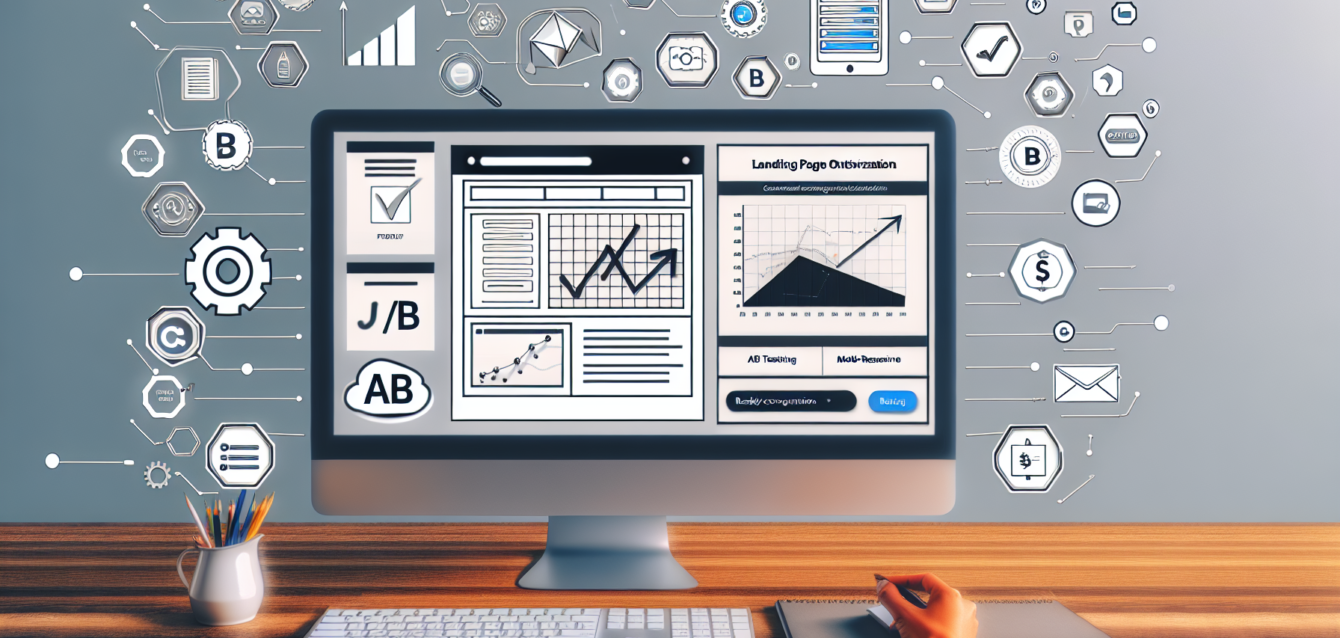
Even experienced marketers cannot predict which landing page variation will outperform the rest. Utilizing Unbounce A/B testing, marketers can compare different landing page versions and assess visitor responses.
Consider testing alternative headlines, CTAs, hero images, form lengths, offers, testimonial placements, or layout structures. Avoid changing multiple elements simultaneously, as this makes it challenging to determine which factor influenced performance shifts.
A structured testing process can yield more data-driven insights for conversion rate optimization.
Connect PPC Data With Landing Page Performance
Do not assess your PPC advertisement and landing page in isolation; they are interconnected aspects of the same conversion journey. Look beyond clicks and impressions to analyze landing page conversion rates, lead quality, cost per conversion, campaign performance, and visitor behavior.
If an advertisement generates numerous clicks yet few conversions, the issue may not necessarily lie with PPC targeting. The landing page might suffer from weak messaging, unclear CTAs, unattractive offers, or excessive form friction.
By merging PPC data with Unbounce conversion optimization, marketers can identify improvement areas and make informed campaign decisions.
Final Thoughts
PPC landing page design is crucial for transforming paid traffic into meaningful business outcomes. Attracting users to click your advertisement is just the first step; the landing page must maintain the conversation and clarify the next action.
Effective PPC landing pages integrate message matching, clear headlines, focused offers, action-oriented CTAs, straightforward forms, social proof, mobile optimization, rapid performance, and ongoing testing.
Platforms like Unbounce empower marketers to create dedicated PPC landing pages, explore various concepts, and continually enhance campaign performance without the need to rebuild their main website for each advertisement.
Instead of solely focusing on generating more clicks, consider what happens after each click. By refining the landing page experience and mitigating unnecessary friction, businesses can extract greater value from their advertising traffic and lay a robust foundation for sustainable PPC growth.
#Unbounce #UnbounceLandingPages #UnbouncePageBuilder #UnbounceLandingPageDesign #UnbounceA/BTesting #UnbounceLeadGeneration #UnbounceMarketingCampaigns #High-ConvertingLandingPages #LandingPageOptimization #ConversionRateOptimization #PPCLandingPageDesign #PPCLandingPageOptimization