
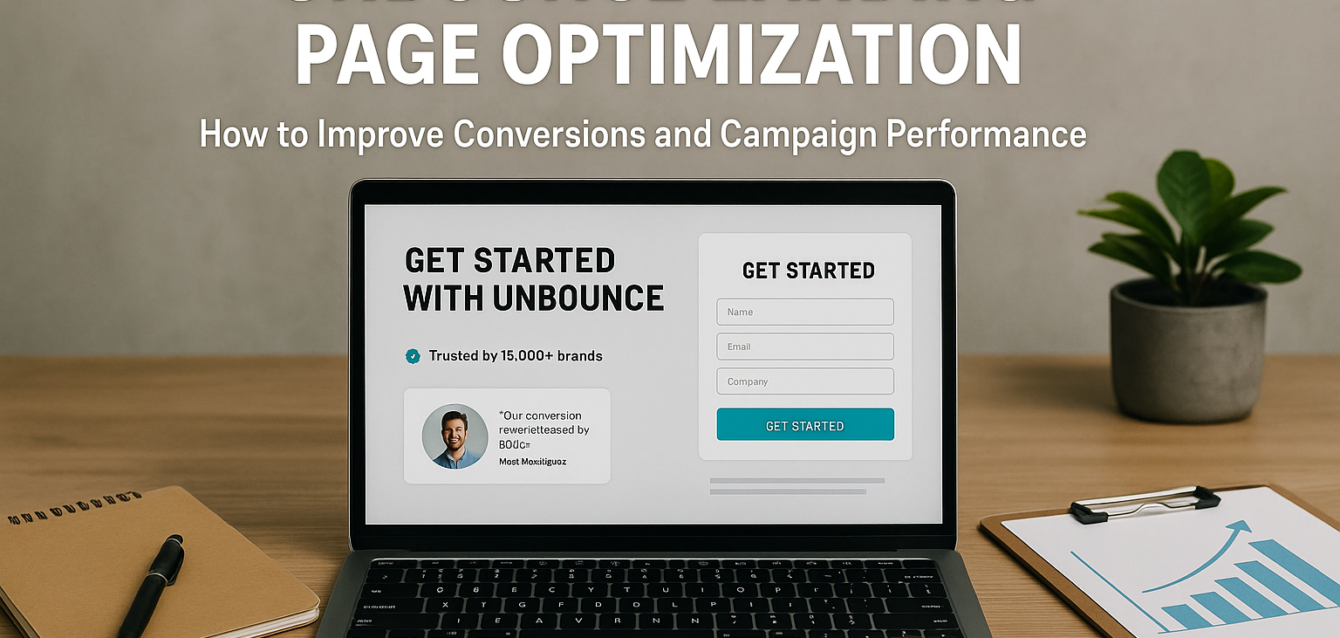
Driving traffic to a landing page is only half the battle. The true value lies in converting that traffic into leads, sign-ups, inquiries, or sales. This is where Unbounce landing page optimization becomes crucial. Instead of relying on a single landing page design and hoping it performs well, businesses can continuously enhance messaging, layout, calls-to-action, forms, and user experience to achieve better conversion results. Unbounce is widely utilized by marketers, agencies, startups, and businesses looking to create and optimize landing pages without heavy reliance on developers. With the right strategy, Unbounce landing page optimization can help businesses reduce friction, enhance user engagement, and derive more value from existing traffic.
What Is Unbounce Landing Page Optimization?
Unbounce landing page optimization is the process of improving individual landing page elements to increase the percentage of visitors who complete a desired action. This action could involve filling out a form, booking a consultation, downloading a resource, starting a free trial, purchasing a product, or registering for an event. The objective extends beyond merely enhancing the page’s appearance; effective optimization focuses on making the page clearer, faster, more relevant, and easier to navigate. Small adjustments in headlines, page structure, calls-to-action, forms, social proof, and messaging can significantly impact conversion performance.
Start With a Clear Conversion Goal
Before optimizing an Unbounce landing page, define the specific objective the page aims to achieve. Ideally, a landing page should have one primary conversion goal, as trying to encourage visitors to fulfill multiple unrelated actions can lead to confusion and diminish focus. For instance, if the aim is to generate demo requests, all content, design, and CTAs should align with that goal. Avoid unnecessary navigation links, unrelated offers, or competing buttons that could distract users. A clear conversion goal also simplifies performance measurement, allowing you to track whether your changes positively or negatively affect the desired outcome.
Improve Your Landing Page Headline
The headline is among the most crucial elements on the page, guiding visitors in determining the content’s relevance. A strong headline should clearly convey the primary benefit or value proposition. Rather than using generic phrases such as “Take Your Business to the Next Level,” articulate what visitors will achieve. A headline like “Generate More Qualified Leads From Your Existing Website Traffic” offers a clearer outcome. Additionally, ensure message consistency between your advertisement, email, social media post, or search result and your Unbounce landing page, allowing visitors to recognize they have arrived at the right destination immediately.
Strengthen Your Value Proposition
After capturing attention with the headline, the page should quickly clarify why the visitor should care about the offer. A compelling value proposition should convey what the product or service does, who it’s designed for, the problem it addresses, and its unique qualities. Rather than focusing solely on features, translate those features into meaningful benefits. For example, instead of stating that your platform includes automated reporting, highlight that users can save hours each week through automatic campaign reports. Visitors typically prioritize the outcomes they can achieve over technical specifications.
Optimize Your Calls-to-Action
Your call-to-action should clearly indicate what will happen when visitors click. Generic CTAs like “Submit” or “Click Here” may lack the necessary value. Opt for more specific alternatives, such as “Start My Free Trial,” “Get My Free Audit,” “Download the Guide,” “Book a Consultation,” or “Request a Demo,” to provide clarity regarding the next step. The CTA should also be highly visible without overwhelming the page’s aesthetic. Use consistent button styling and repeat the primary CTA when appropriate on longer landing pages. Most importantly, every CTA should focus on the same primary conversion objective.
Reduce Form Friction
Forms can introduce significant friction on a landing page. When requesting information, the more details you ask for, the greater the effort required from visitors before converting. Request only the essential information you need. For instance, an early-stage lead generation campaign may only require a name and email address, while a consultation request might justifiably require additional fields like company name, website, or project requirements. The number of fields should align with the value of the offer and the visitor’s intent level. Regularly reviewing your Unbounce lead generation forms and eliminating unnecessary fields can streamline the conversion process.
Add Relevant Social Proof
Visitors may hesitate to convert if they are unfamiliar with your business, making social proof a valuable component of landing page optimization. Customer testimonials, client logos, case study results, star ratings, user numbers, industry awards, and certifications can all help establish credibility. Specific social proof is generally more persuasive than vague statements. For example, instead of a testimonial stating simply “Great service,” use one explaining how the company increased leads, reduced costs, or improved campaign performance. Placing social proof close to key decision points such as forms, pricing information, or calls-to-action can enhance effectiveness.
Keep the Page Visually Simple
Landing page optimization is not about adding more elements; often, eliminating unnecessary content improves the user experience. Utilize a clear visual hierarchy so visitors can quickly scan the page and identify the most important information. Headlines should stand out, supporting content should be easy to read, and calls-to-action should be prominent. Avoid excessive animations, complex backgrounds, too many font styles, or extraneous sections that do not contribute to the conversion goal. White space can enhance readability and help important elements to stand out. A focused and simple Unbounce landing page often makes it easier for visitors to comprehend the offer and take action.
Optimize the Mobile Experience
A significant portion of website traffic originates from smartphones, rendering mobile optimization essential. Your landing page should be easy to read and navigate on smaller screens. Assess headline sizes, button dimensions, form fields, spacing, images, and section lengths on mobile devices. Visitors should not have to zoom in, scroll horizontally, or struggle to click on a CTA button. The most crucial content should appear early, and the primary conversion action should be easily accessible. A landing page that performs well on desktop but poorly on mobile can significantly compromise overall conversion performance.
Improve Page Speed
Page speed plays an integral role in landing page performance. If visitors face long loading times, they may abandon the page before seeing the offer. Large images, unnecessary scripts, videos, and complex design elements can impede page performance. Optimize images, eliminate unneeded elements, and maintain an efficient overall page experience. Fast-loading pages not only enhance usability but can also lead to improved campaign performance, especially for traffic originating from paid advertising.
Use A/B Testing
One of the most effective methods for enhancing Unbounce landing pages is through A/B testing. Rather than making changes based solely on assumptions, you can compare two versions of a landing page and measure visitor responses. This may involve testing different headlines, CTA wording, hero images, form lengths, testimonials, offers, page layouts, or pricing information. To gain meaningful insights, focus on testing one variable at a time rather than altering many elements simultaneously. Optimization thrives as an ongoing process rather than a one-time redesign.
Match the Page to Visitor Intent
Visitors arrive with varying expectations. Those clicking a Google Ads campaign may have different intents than someone accessing a page via an email newsletter, social media post, or blog article. Creating campaign-specific landing pages can improve relevance and message alignment. For example, visitors searching for a “free website audit” should land on a page tailored specifically to that audit rather than a general services page. Strong message matching quickly informs visitors that the page directly relates to their search, enhancing the overall user experience.
Analyze and Improve Continuously
Landing page optimization should continue even after the page goes live. Monitor key metrics such as conversion rates, form completion, engagement, traffic sources, and overall campaign performance. If a page attracts significant traffic but results in few conversions, investigate potential causes—such as weak messaging, poor targeting, complicated forms, lack of trust, slow loading times, or unclear CTAs. Utilize performance data to pinpoint friction points and test improvements. Over time, continuous optimization can transform an ordinary landing page into a potent conversion asset.
Final Thoughts
Unbounce landing page optimization revolves around crafting a clear, relevant, and conversion-focused experience for visitors. A successful landing page merges compelling messaging, a strong value proposition, targeted calls-to-action, simplified forms, social proof, mobile optimization, fast performance, and continuous testing. Instead of constantly investing more in acquiring additional traffic, businesses can enhance the performance of the traffic they already possess.
By evaluating landing page data, testing meaningful modifications, reducing friction, and refining the customer journey, marketers can steadily improve conversions and boost campaign outcomes. The essence of optimization lies in treating it as an ongoing endeavor: build, measure, test, learn, and refine. Over time, these enhancements can lead to stronger landing pages, more qualified leads, and improved marketing efficacy.
#UnbounceLandingPageOptimization #UnbounceConversionOptimization #UnbounceABTesting #LandingPageOptimization #UnbounceLeadGeneration #LandingPageDesign #UnbouncePageBuilder #LandingPageABTesting #HighConvertingLandingPages #ConversionRateOptimization #ConversionFocusedLandingPages #UnbounceLandingPages