
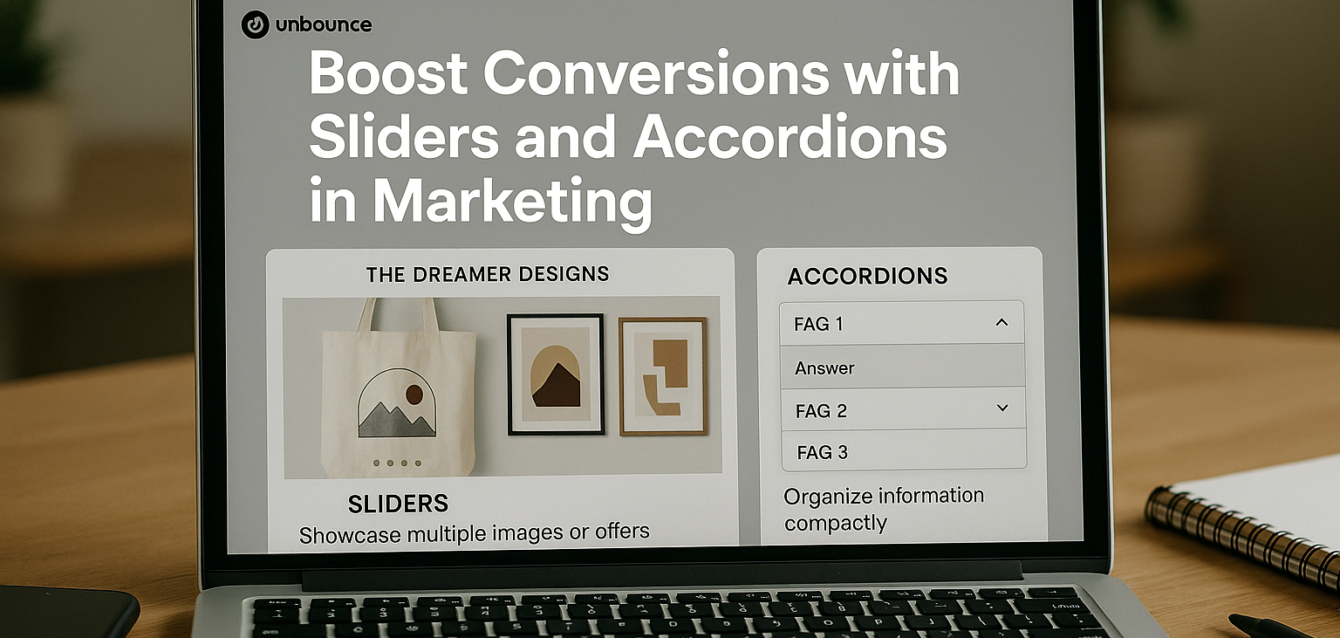
In the ever-evolving landscape of digital marketing, creating engaging and user-friendly landing pages is crucial. For designers and online marketers, tools like Unbounce offer the flexibility to enhance page aesthetics and functionality. Among these tools, sliders and accordions stand out as versatile options for improving user experience and boosting conversion rates. Understanding when and how to effectively integrate them can make a significant difference in your marketing efforts, especially for brands like The Dreamer Designs.
Understanding Sliders and Accordions
Sliders are dynamic elements that allow you to showcase multiple images, offers, or pieces of content within the same space. They provide visual engagement and can help capture the interest of visitors as they navigate your site. On the other hand, accordions are useful for presenting content in a compact format, where users can click to view more information. This interaction encourages deeper exploration of your offerings without overwhelming visitors with too much information at once.
When to Use Sliders
Sliders can be particularly effective on landing pages aimed at showcasing multiple products or services. For instance, if The Dreamer Designs is promoting a new line of designs, a well-placed slider can highlight various products, allowing customers to quickly browse options. Sliders work best when:
– You have high-quality visuals: Engaging images capture attention and entice users to explore further.
– You want to convey multiple messages: Use sliders to display different promotions or seasonal offers without cluttering the layout.
– You see high engagement potential: When analytics show that users are clicking through to explore further, sliders can keep them engaged.
When to Use Accordions
Accordions shine in situations where information needs to be well-organized but also accessible. They are perfect for FAQs, product details, or testimonials. For instance, if The Dreamer Designs has a wide array of product features, using an accordion can simplify the viewing process. Consider using accordions when:
– You have extensive information: Instead of a long scroll, help users find what they’re looking for quickly.
– You want to improve mobile responsiveness: Accordion adjusts well to smaller screens, offering a sleek and user-friendly experience.
– You want to guide users through a decision-making process: Effective use of accordions can condense critical information, helping potential customers make informed decisions.
Best Practices for Using Sliders and Accordions
To ensure optimal performance, follow these best practices:
1. Keep it Simple: Avoid cluttered design. Whether using sliders or accordions, ensure that the content is straightforward and visually appealing.
2. Optimize for Speed: Ensure all images in sliders are compressed for fast loading times. Slow pages can deter visitors.
3. Test Different Variations: Use A/B testing to evaluate which elements resonate best with your target audience.
4. Prioritize Mobile Experience: Ensure both sliders and accordions render well on mobile devices, as a significant amount of traffic comes from mobile users.
5. Use Descriptive Titles: In accordions, include clear headings that inform users what to expect when they click to expand.
In conclusion, both sliders and accordions can significantly enhance the user experience on your landing pages. For brands like The Dreamer Designs leveraging these tools strategically could lead to increased engagement and better conversion rates. By understanding the context in which to use each tool and following best practices, you can create effective landing pages that resonate with your audience.
#marketing #design #userexperience #Unbounce #digitalmarketing #webdesign